WebMCP: A New Step in the Evolution of Artificial Intelligence on the Web
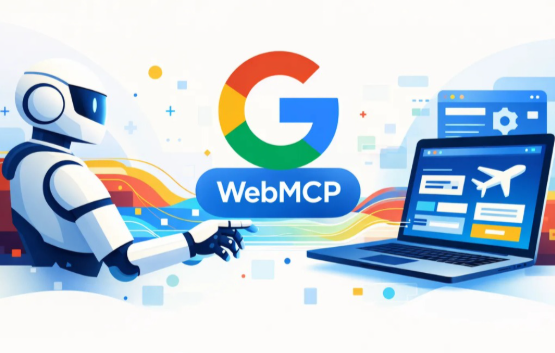
Google has introduced WebMCP (Web Model Context Protocol) in an early preview inside the Chrome browser, a technological innovation that could significantly transform how artificial intelligence interacts with websites.
Until now, AI agents had to analyze web pages much like humans do: by reading visual elements, identifying buttons, or simulating clicks. These methods often relied on techniques such as web scraping, screenshots, or DOM interpretation, which could make interactions slow, costly, and sometimes unreliable.
With WebMCP, a new approach is emerging. Websites can now expose their functionality as structured actions that AI systems can access and use directly.
How WebMCP Works
The idea behind WebMCP is to allow websites to communicate with AI agents through a standardized interface.
Instead of trying to guess how a page works, AI systems can directly access the actions offered by a website, as if they were using an official API.
In practice, an AI agent could:
- – Search for a flight on a travel website
- – Add products to an e-commerce cart
- – Fill out and submit a form
- – Book an online service
All of this happens without visually analyzing the interface or simulating user behavior.
This approach allows AI systems to immediately understand which actions are available and how to execute them.
Faster and More Reliable Interactions
The introduction of WebMCP could significantly improve how artificial intelligence systems interact with the web.
Compared to current approaches, this technology offers several advantages:
- – Faster interactions, since AI no longer needs to analyze the entire page
- – Fewer errors, thanks to clearly defined actions
- – More reliable automation, ideal for AI assistants and autonomous agents
Toward a Web Designed for AI Agents
The arrival of WebMCP reflects a broader trend: the evolution of the internet into a platform designed not only for humans but also for intelligent machines.
As digital assistants, autonomous agents, and automation systems continue to grow, websites will need to adapt in order to allow these technologies to interact with their services efficiently.
In this context, WebMCP could become a core technology of the next generation web, where online platforms are directly compatible with AI systems.
An Innovation That Could Redefine the Future of the Web
Although WebMCP is still in preview, this technology could play a key role in the evolution of the digital ecosystem.
If widely adopted, it could reshape how companies design online services and enable a new generation of intelligent applications capable of interacting with the web in a native and structured way.
The question remains open:
Is WebMCP the beginning of a web truly designed for artificial intelligence?